
-
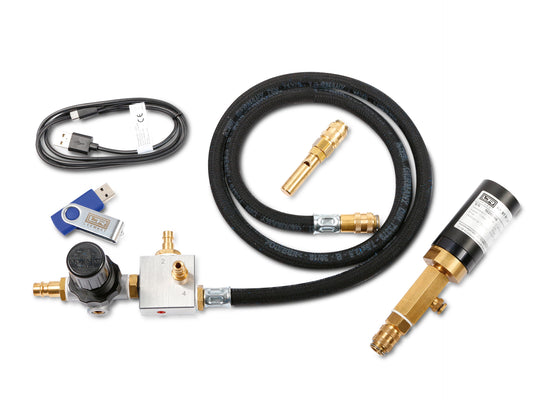
Compression/engine pressure loss tester petrol/diesel engines Bluetooth®
Regular price €781,00 EURRegular priceUnit price per€899,00 EURSale price €781,00 EURSale -
Compression pressure recorder Bluetooth
Regular price €499,45 EURRegular priceUnit price per€653,31 EURSale price €499,45 EURSale -
Test adapter set for compression and engine pressure loss testers
Regular price €299,00 EURRegular priceUnit price per -
Test adapter set for compression and engine pressure loss testers
Regular price €367,00 EURRegular priceUnit price per -
Walnut shell granulate blasting device for cleaning coking in the engine
Regular price €817,87 EURRegular priceUnit price per -
Walnut shell granules
Regular price €39,50 EURRegular priceUnit price per -
TDC (top dead center) adjustment tool
Regular price €75,12 EURRegular priceUnit price per -
Oil pressure tester (0...10 bar)
Regular price €179,24 EURRegular priceUnit price per€0,00 EURSale price €179,24 EUR -
Precision measuring device for non-contact speed measurements
Regular price €399,26 EURRegular priceUnit price per -
Compression pressure tester (0...40 bar) for petrol engines
Regular price €242,10 EURRegular priceUnit price per -
Compression pressure tester (0...40 bar) truck diesel engines
Regular price €799,39 EURRegular priceUnit price per€891,30 EURSale price €799,39 EURSold out -
Compression pressure tester (0...40 bar) Opel
Regular price €571,40 EURRegular priceUnit price per -
Compression pressure tester (0...40 bar) Jaguar and Land Rover
Regular price €571,40 EURRegular priceUnit price per -
Compression pressure tester (0...40 bar) petrol and diesel engines
Regular price €474,73 EURRegular priceUnit price per -
Engine oil funnel set
Regular price €399,00 EURRegular priceUnit price per -
Angle extension for engine oil filler funnel
Regular price €99,00 EURRegular priceUnit price per


Frequently Asked Questions
What is the difference between a compression pressure test and an engine leak-down test?
Compression testing measures the pressure built up in the cylinder during the starting process. Differences between individual cylinders or readings that are too low can indicate wear or leaks in the combustion chamber. In a cylinder leak-down test, by contrast, compressed air is deliberately introduced into the respective cylinder to determine how much air escapes. This often allows the cause of the pressure loss to be pinpointed more precisely, for example in the area of the valves, piston rings, or cylinder head gasket. Both testing methods therefore complement each other in mechanical engine diagnostics.
Which testing device is suitable for gasoline and diesel engines?
Many Leitenberger compression and cylinder-pressure-drop testers can be used on both petrol and diesel engines. The most important thing is to have the correct adapter for the engine in question. Since the connection, thread and required measuring range may vary depending on the engine, the vehicle, engine type and available adapters should be taken into account when making a selection.
Which adapter do I need for compression pressure or engine vacuum testing?
The required adapter depends on the vehicle, engine, and intended test connection. For gasoline engines, adaptation is usually carried out via the spark plug opening, while for diesel engines, depending on the engine, for example, via the glow plug or injector opening. Autotestgeräte Leitenberger offers individual adapters as well as adapter sets for various vehicles and engines. Therefore, the assignment to the specific engine or vehicle should be checked before ordering.
Analog or digital compression tester – which version makes sense?
Analog testing devices are suitable for conventional compression pressure measurement with a direct display or mechanical recording of the measured value. In contrast, digital Bluetooth® testing devices transmit the measured values directly to a smartphone or tablet. There, the results can be displayed, analyzed, saved, and, for example, documented as a PDF. Which version is appropriate therefore depends primarily on whether a simple measurement is sufficient or whether digital documentation of the test results is also desired.
Can I check compression pressure and engine vacuum with one device?
Yes. With the appropriate combination tools, both compression pressure measurements and engine leak-down tests can be performed.The Bluetooth® compression/engine leak-down tester DRV 05_BT, for example, enables both testing methods and transmits the measured values to the "LR Smart Tools" app. There, the results can be evaluated and documented.To connect to the respective engine, suitable compression pressure or combustion chamber adapters are required.
How can the engine oil pressure be checked? Copy
To check the engine oil pressure, a suitable oil pressure gauge is connected instead of or to the connection of the vehicle-side oil pressure sensor or to a designated test connection. The measured oil pressure can then be compared with the target values under the operating conditions specified by the vehicle manufacturer. For example, an oil pressure that is too low or fluctuates noticeably may indicate problems in the lubrication system. Different connection adapters are required for different vehicles and engines.